Drop off your CV
We'd love to hear from you. Send us your CV and one of our specialist consultants will be in touch.



In modern workplaces, leadership requires the ability to understand and connect with people. Emotional intelligence and empathy are critical traits and skills for leaders to build trust, drive engagement, and to create environments where people thrive.
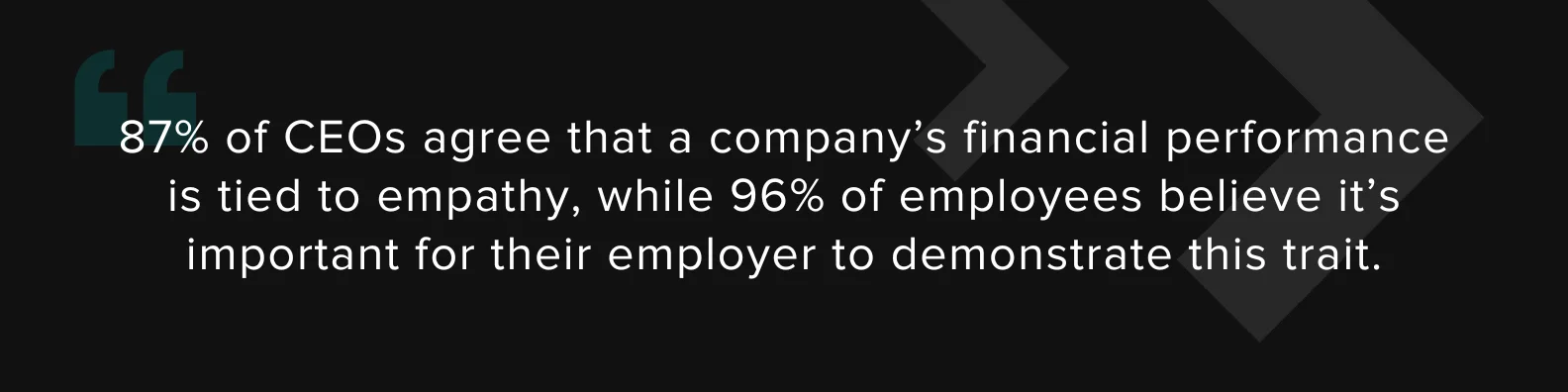
A study found that 87% of CEOs agree that a company’s financial performance is tied to empathy, while 96% of employees believe it’s important for their employer to demonstrate this trait.
In this article, we explore the meaning of emotional intelligence, why it’s important for effective leadership, and how leaders can develop it to build stronger teams.
Contact CSG Talent to discuss how emotionally intelligent leaders can transform your business and drive stronger team performance.
Emotional intelligence is the ability to recognise, understand, and manage your own emotions, while also acknowledging and influencing the emotions of others. The concept, which was popularised by psychologist Daniel Goleman, highlights that leadership success relies as heavily on managing people and relationships as it does on technical skillsets.
In practice, emotionally intelligent leaders are aware of people’s emotions and build trust through empathy and authenticity. This allows leaders to strike the right balance between results and relationships by making sure performance doesn’t come at the expense of employee wellbeing.
Self-awareness is the ability to recognise and understand your own emotions, strengths, and weaknesses, and being conscious of how these affect others. Leaders who possess self-awareness can identify when stress or frustration is influencing their behaviour and take steps to manage it before it impacts their team. This awareness improves authenticity and makes leaders more approachable and trustworthy.
Once you’re aware of your emotions, the next step is managing them effectively. Emotional regulation enables leaders to remain calm and composed under pressure, making it easier to navigate conflict or uncertainty. This doesn’t mean suppressing emotions but rather understanding them and responding in a balanced way. Leaders who manage their emotions well create stability within their teams and set the tone for successful problem-solving in high-pressure environments.
Empathy is a crucial element of emotional intelligence because it involves the ability to fully understand what other people are feeling, even in situations where those emotions might not be expressed directly or verbally. Empathetic leaders listen carefully, pay attention to non-verbal cues, and adapt their approach based on what their team members need. Empathy also allows leaders to build stronger relationships and guide people through challenges with compassion and fairness.
Strong relationship skills, such as clear communication and effective conflict resolution, allow leaders to create more collaborative and innovative teams. These strengths provide the foundation for influencing others without relying on intimidation, delivering feedback that genuinely inspires personal and professional growth, and creating a culture of mutual respect that is essential for long-term success.
Leading with emotional intelligence helps build trust while demonstrating empathy and respect. This creates an environment where people feel comfortable sharing ideas and raising concerns, which improves collaboration between team members.
In fact, employees with empathetic leaders report 76% higher engagement, and teams led by emotionally intelligent managers show 4 times higher engagement rates. Organisations with high engagement also see 2.7 times higher employee loyalty, showing how much trust and empathy influence retention.
Leaders who connect emotionally with their teams improve morale and create a sense of belonging. Recognition, open communication, and empathy for personal circumstances all contribute to a positive culture where people feel valued.
95% of employees said they were more likely to stay with an organisation that demonstrated empathy, and 81% said they would work longer hours for empathetic employers. When employees feel that leaders genuinely care, their motivation and commitment naturally increase.
Emotional intelligence also plays a critical role in supporting wellbeing, as it allows leaders to identify signs of stress or burnout early on.
A meta-analysis published in BMC Psychology highlights a significant link between emotional intelligence and improved employee well-being. The findings show that higher levels of emotional intelligence are associated with reduced employee burnout, showing its importance for improving overall wellbeing in the workplace.
Emotionally intelligent leaders make better decisions because they understand how personal feelings influence judgement. Self-awareness helps recognise when bias or frustration may skew your thinking, while empathy allows you to consider the wider impact of your choices. This results in a more balanced decision-making process that aligns strategic goals with the needs of individuals.
By understanding what motivates individuals and creating shared values, leaders create a highly motivated workforce that is aligned with organisational goals. Emotionally intelligent leaders provide reassurance and clarity through challenging times, helping teams stay focused and adaptable through change. This increases team resilience, which is a crucial quality in today’s rapidly evolving business landscape.
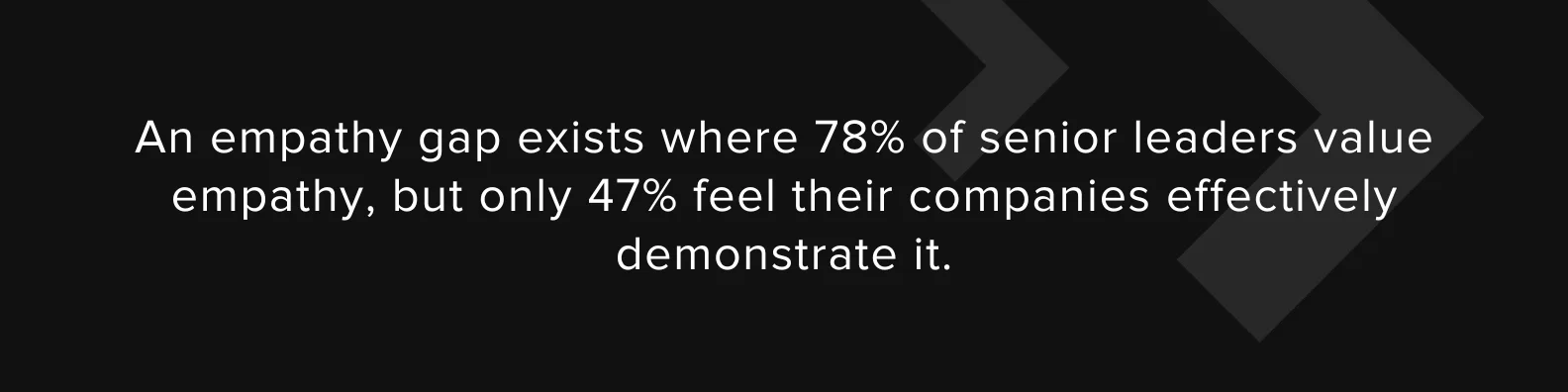
Despite its proven impact, many organisations still struggle to integrate empathy effectively. According to a Harvard Business Review article, an empathy gap exists where 78% of senior leaders value empathy, but only 47% feel their companies effectively demonstrate it.
As a leader, you can strengthen your emotional intelligence by taking time to reflect on your interactions and considering how your team might have perceived your tone or decision. Structured feedback sessions can provide valuable insight into emotional patterns and areas for improvement.
Remaining calm under pressure is an essential skill, and techniques such as pausing before responding, positive thinking, and breathing exercises can help you regulate your emotions. Over time, this composure becomes more natural, helping you maintain perspective through moments of tension or uncertainty.
Empathy can be learnt and practised by listening without interrupting, asking open-ended questions, and genuinely considering perspectives that differ from your own. Simple habits, such as following up after difficult conversations or acknowledging personal milestones, can make a powerful difference.
Emotionally intelligent leaders typically make strong communicators, as they ensure their teams always understand what decisions are being made and, crucially, why. These strong social skills allow you to manage conflict constructively and make sure teams are always aligned around shared goals.
Emotional intelligence is a skill that strengthens with consistent effort. Leadership coaching and 360-degree feedback programmes can all support growth and help develop your interpersonal skills. Inviting honest feedback from peers and employees demonstrates humility and openness, encouraging the same culture throughout the organisation and creating a cycle of shared learning and emotional maturity.
At CSG Talent, we understand that exceptional leadership is about more than skills or experience. It’s about emotional intelligence, empathy, and the ability to bring out the best in others. We work with organisations to identify and attract leaders who can inspire engagement and build resilient teams that drive positive outcomes.
By partnering with our recruitment experts who understand the emotional and cultural aspects of leadership, you can secure talent that drives positive results and strong relationships.
Contact CSG Talent to connect with leadership and executive search experts who understand the importance of empathy, culture, and emotional intelligence in building successful teams.
Here are some insightful books and resources that can deepen your understanding of emotional intelligence and help strengthen your leadership practices: